
Spanish Synagogue vs Old New Synagogue Comparison in Prague
Choosing between the top sites in Prague can be difficult. Our Spanish Synagogue vs Old New Synagogue comparison helps you decide which landmark fits your schedule. Both buildings sit within the historic Jewish Quarter. They offer very different experiences for travelers. One is a golden masterpiece of the 19th century. The other is a medieval fortress of faith. Most visitors include these on a Jewish Quarter Josefov tour to see the full history of the city.
Quick Comparison of Prague's Iconic Synagogues
If you have limited time, you might need to pick just one. This quick guide highlights the main differences between these two famous sites. The Spanish Synagogue is famous for its beauty and intricate art. The Old-New Synagogue is famous for its age and legendary past. Both are essential stops for any must-see places in Prague list.
- Pick the Spanish Synagogue if you love gold, ornate architecture, and museum exhibits.
- Pick the Old-New Synagogue if you want to see the oldest active synagogue in Europe and hear Golem legends.
| Feature | Spanish Synagogue | Old-New Synagogue |
|---|---|---|
| Architectural Style | Moorish Revival | Early Gothic |
| Built In | 1868 | Around 1270 |
| Main Highlight | Golden interiors and art | The Golem legend and medieval vaulting |
| Ticket Type | Jewish Museum Circuit | Usually a separate or add-on ticket |
Architecture and Visual Style Differences
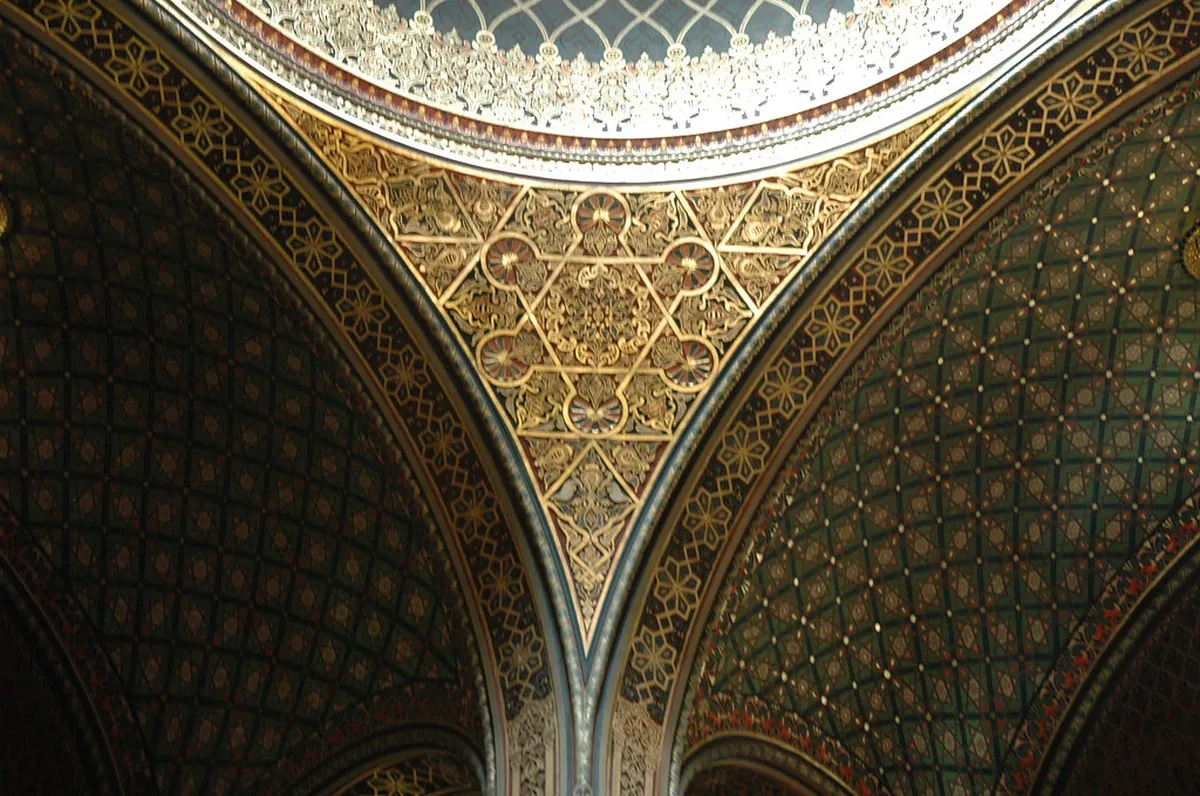
The visual styles of these two buildings could not be more different. The Spanish Synagogue features a Moorish Revival design. It was inspired by the Alhambra in Spain. Inside, every inch of the walls is covered in gold and geometric patterns. It feels bright, warm, and incredibly detailed. It is often called the most beautiful synagogue in Europe.
In contrast, the Old-New Synagogue is a somber medieval structure. It features thick stone walls and narrow windows. The interior is dark and atmospheric. You will see a unique five-ribbed vaulting system on the ceiling. This was designed to avoid the shape of a cross. The furniture is heavy wood, and the floor is original stone. It feels like stepping back 700 years in time.
Historical Significance and Legends
The Old-New Synagogue is the spiritual heart of the Jewish Quarter. It has survived fires, floods, and wars since the 13th century. It is most famous for the legend of the Golem. Locals say the remains of the clay giant are hidden in the attic. This makes it a mysterious place for fans of folklore. It remains an active place of worship today.
The Spanish Synagogue official site notes its role as a museum. It stands on the site of the oldest Jewish house of prayer in Prague. However, the current building is much newer. It represents the wealth and cultural growth of the 19th century. Today, it hosts permanent exhibitions about Jewish history in the Czech lands. It also serves as a popular venue for classical music concerts.
Ticket Prices and Tour Logistics
Ticketing can be confusing for first-time visitors. Most people buy a combined ticket for the Jewish Museum. This ticket usually includes the Spanish Synagogue and the Old Jewish Cemetery. You can check the Jewish Museum in Prague combined ticket prices for the latest rates. This is the best value if you want to see multiple sites.
The Old-New Synagogue is managed separately from the main museum circuit. You often need to buy an additional ticket to enter. If you only want to see the oldest building, you can buy a single-entry pass. A simple rule of thumb: if you plan to see three or more buildings, the full circuit ticket is the best deal. Always remember that synagogues are closed on Saturdays and Jewish holidays.
Which One Should You Visit in 2026?
In 2026, both sites remain top attractions in the Josefov district. If you are an art lover or photographer, the Spanish Synagogue is the winner. The light and gold provide amazing visual interest. It is also more comfortable for those who prefer modern museum layouts. It is a great way to see the artistic side of Prague's history.
If you are a history buff, choose the Old-New Synagogue. Its age and survival are truly remarkable. Standing in a room that has been used for prayer for seven centuries is a powerful experience. It is less "pretty" but far more historic. If your schedule allows, try to visit both to see the full evolution of the Jewish Quarter.
Frequently Asked Questions
Can I take photos inside the synagogues?
Photography is generally allowed in the Spanish Synagogue with a permit or standard ticket. However, the Old-New Synagogue has stricter rules. It is an active place of worship. You should always check the signs at the entrance. Flash is usually forbidden in both locations to protect the art.
Which synagogue is closer to the Old Town Square?
The Old-New Synagogue is slightly closer to the Old Town Square. It is only a five-minute walk away. The Spanish Synagogue is about three minutes further into the Jewish Quarter. Both are very easy to reach on foot from the city center.
Is the Golem actually in the Old-New Synagogue?
The Golem is a legend, so there is no physical evidence in the attic. The attic is also not open to the public for safety reasons. However, the mystery adds to the atmosphere of the building. Many visitors find the story makes the visit more exciting.
Our Spanish Synagogue vs Old New Synagogue comparison shows that both sites offer unique value. The Spanish Synagogue dazzles with gold and art. The Old-New Synagogue hums with ancient history and legends. For the best experience, book a Jewish Quarter Josefov tour that includes both. This ensures you see the full story of Prague's Jewish heritage. Enjoy your journey through one of Europe's most beautiful cities.
Official resources
Use these sources for official schedules, tickets, routes, and updates.
- Prague.eu — Official city tourism portal; unverified.
- Praha.eu — Official municipal government portal; unverified.
- Visit Czechia — National tourism board; unverified.
- UNESCO World Heritage Centre — Official UNESCO heritage listing; unverified.
- Prague Castle — Official landmark domain; unverified.